
Neosho County Probate Division
Probate in Neosho County is a District Court function. The 31st Judicial District page lists probate under filings at the Erie division, 100 S. Main, Room 110, Erie, KS 66733, phone 620-244-3831. The local route is the Probate Division of the District Court, not a standalone probate court with its own separate clerk. Certified copies of probate orders, letters, or case papers should be requested from the Clerk of the District Court.
The Erie focus is important because Neosho County has two District Court offices. Chanute handles many criminal, domestic, civil, limited civil, small claims, juvenile, and statutory bond filings from 1955 forward. Erie is the listed filing location for probate, marriage licenses, guardianship and conservatorship, adoption, care and treatment, traffic, fish and game, liens, state tax warrants, and older civil or domestic records before September 2001. Probate users should call Erie first unless the clerk directs them elsewhere.
Neosho County Probate Matters
Probate records can cover much more than a will. Kansas probate filings may involve estates with wills, estates without wills, petitions for administration, letters testamentary, letters of administration, creditor notices, claims, inventories, property transfers, final accountings, and final settlements. Neosho County probate records may also connect to guardianship of minors or adults, conservatorship of property, trust or fiduciary disputes filed in court, will contests, and contested estate proceedings.
Probate users should also separate estate records from county land or tax records. A probate order may authorize a transfer or appoint a fiduciary, but deeds, tax rolls, liens, and county administrative records may be maintained by other offices. The District Court file is the source for petitions, letters, notices, inventories, accountings, and court orders. If the request is about a later property recording or county tax entry, the clerk may direct the requester to a different county office after the probate order is identified.
- Estate cases include wills, administration petitions, creditor notice, inventory, claims, orders, and closing papers.
- Guardianship cases concern personal care decisions for a minor or adult when court authority is required.
- Conservatorship cases concern management of property or funds for a protected person.
- Contested probate matters can include will disputes, fiduciary objections, heir disputes, or creditor conflicts.
- Restricted filings may include minor, medical, adoption, care-and-treatment, or sealed details.
The K.S.A. 59-2221 probate petition statute is the Kansas statute source for who may petition for probate or administration.
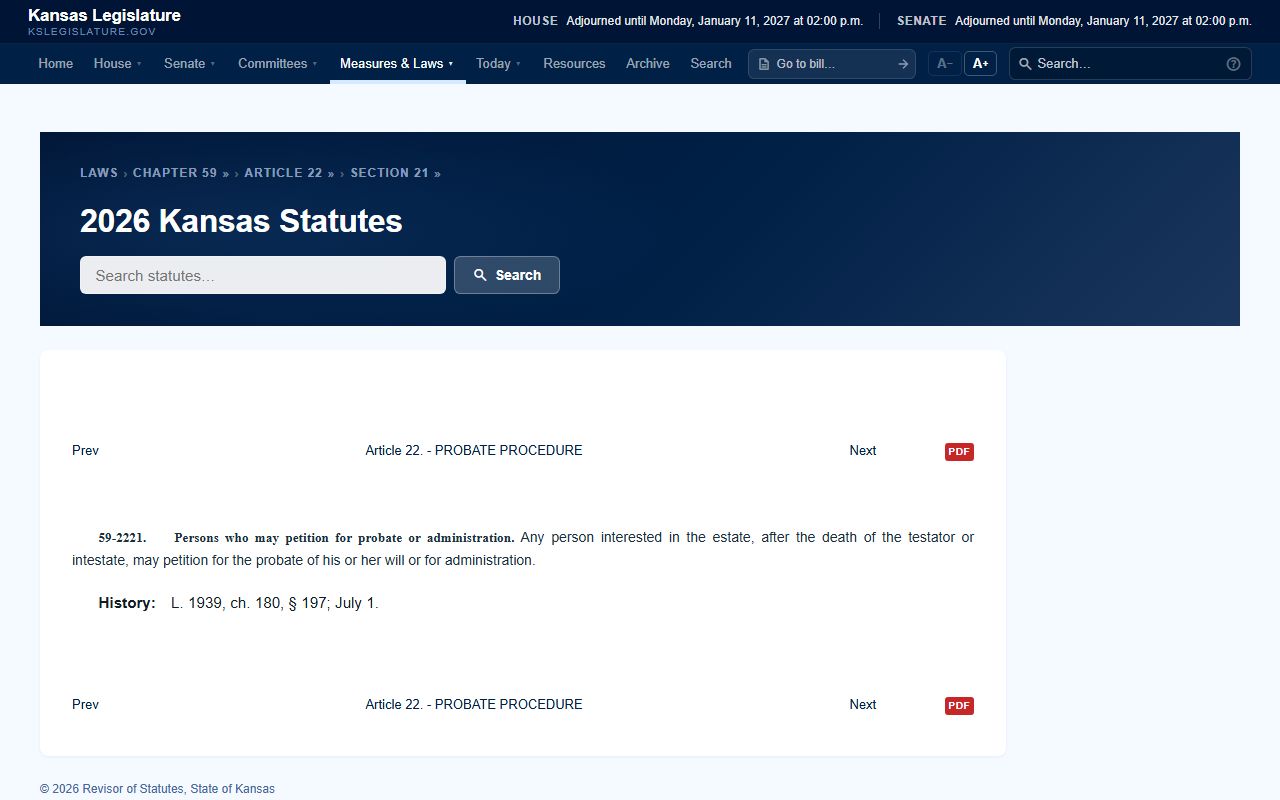
That statute supports the local filing path by describing who may start a probate or administration case after death.
Neosho County Probate Terms
Probate files use terms that are easy to confuse. These definitions help read a docket, petition, or order before asking the Erie clerk for copies.
- Testator
- The person who made a will.
- Executor
- The person named to carry out a will, sometimes called a personal representative in broader estate practice.
- Intestate
- A person died without a valid will, so estate distribution follows Kansas law and court orders.
- Guardianship
- A court case about authority over personal care decisions for a minor or adult.
- Conservatorship
- A court case about authority over property, money, or financial affairs for a protected person.
Search Neosho County Probate Records
Start with Kansas CaseSearch when the probate matter may be public and recent enough to appear in the statewide system. Search by decedent name, protected person name, petitioner name, interested person, attorney, or case number when known. If the case does not appear, call the Erie division because probate is listed there. A courthouse public terminal may show public material that is not available remotely, while older files may require clerk retrieval.
Names can be hard to search in estate files because the caption may use a decedent, an estate, a protected person, or an interested person rather than the name a family member expects. Try alternate spellings and known relatives only as clues, then call the Erie clerk with the death date, approximate filing year, and known fiduciary or attorney if available. This is more reliable than assuming a no-result search means no probate case was filed.
- Search CaseSearch by known case number or party name.
- If no record appears, call the Erie District Court division at 620-244-3831.
- Ask whether the file is public, archived, restricted, or available at a courthouse terminal.
- Request plain or certified copies from the Clerk of the District Court when copies are needed.
- Expect restrictions when the matter involves a minor, adoption, care and treatment, medical facts, or a sealed order.
The K.S.A. 45-218 public inspection statute is one of the Kansas Open Records Act sources that frames public inspection.
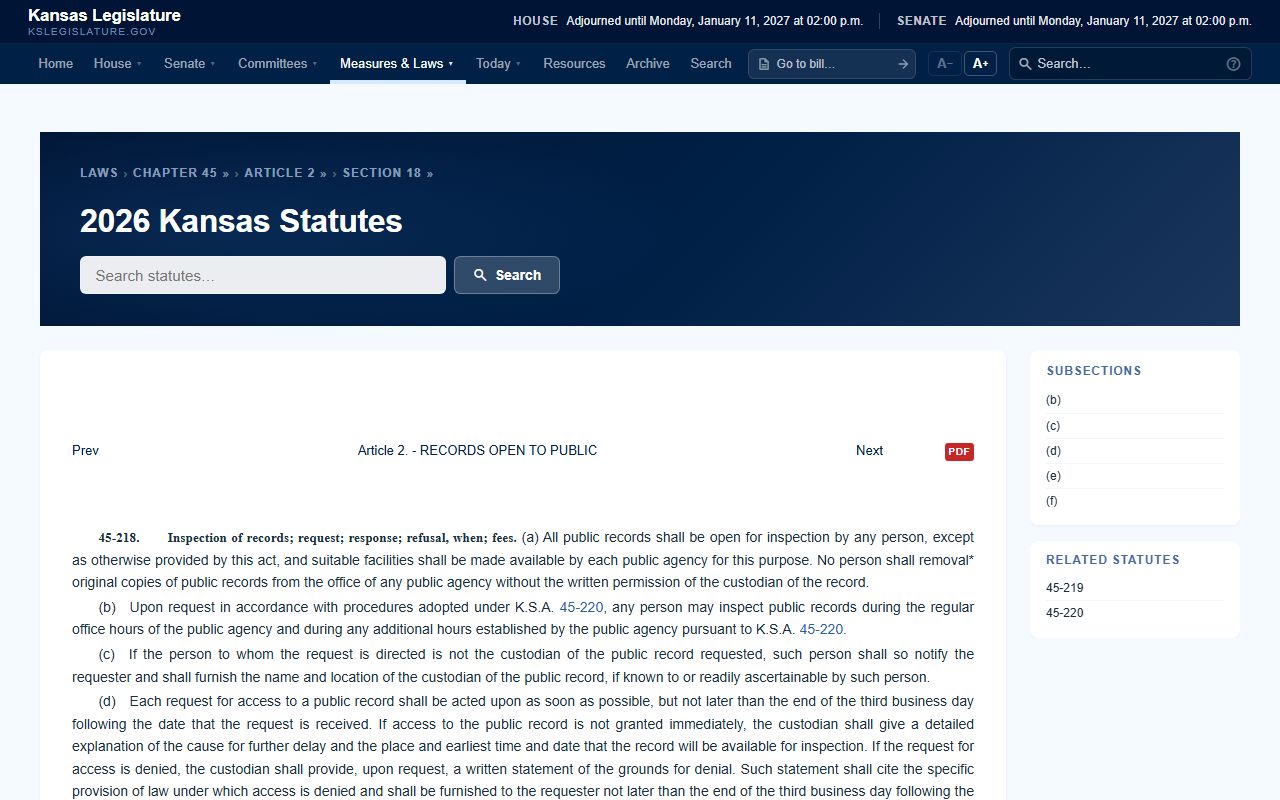
Probate records are court records, so open-records principles apply alongside Kansas court access rules and case-specific restrictions.
Neosho County Probate Court Contact
The researched official source identifies one Neosho County probate filing route: the Erie division of Neosho County District Court. The title "Probate Division of the District Court" describes the work handled there, not a separate probate courthouse. Call before visiting if the request involves an older estate, certified letters, a guardianship file, or a record that may be sealed or archived.
Probate Division of the District Court
Neosho County District Court, Erie Division
100 S. Main, Room 110
Erie, KS 66733
620-244-3831
Monday-Friday 8 a.m.-noon and 1 p.m.-4:30 p.m.
What Neosho County Probate Shows
A probate case file may show the case number, filing date, decedent or protected person, petitioner, heirs, devisees, interested persons, attorney, judge, petition type, will status, letters issued, creditor notice, inventory deadlines, claims, orders, and final settlement. Guardianship and conservatorship records may show reports, accountings, and court orders when public, but details about minors, medical condition, or protected-person finances can be redacted or sealed.
| Field | What It Shows |
|---|---|
| Case number | The District Court tracking number for the probate or guardianship matter. |
| Decedent or protected person | The estate subject, minor, adult, or protected person connected to the filing. |
| Petitioner | The interested person or attorney asking the court to act. |
| Petition type | Probate of will, administration, guardianship, conservatorship, or related fiduciary request. |
| Letters issued | Authority granted to an executor, administrator, guardian, or conservator. |
| Orders and final settlement | Court rulings, distribution orders, accountings, and closing entries when public. |
Neosho County Probate Fees
The official Neosho District Court sources did not locate a local probate fee schedule. Because probate fees can change and depend on filing type, copy type, certification, retrieval, or statewide docket-fee rules, no filing amount should be assumed. Use the Erie District Court clerk for current probate filing, copy, and certification fees.
Fee confirmation should happen before mailing a request because probate copies may involve plain pages, certified orders, letters, archived-file retrieval, or multiple case documents.
| Item | Amount or Status |
|---|---|
| Original probate petition or administration filing | Official Neosho-specific amount not located; call Erie District Court |
| Letters testamentary or letters of administration copies | Official Neosho-specific amount not located; ask the clerk |
| Certified probate order copy | Official Neosho-specific amount not located; confirm before ordering |
| Guardianship or conservatorship filing | Official Neosho-specific amount not located; call Erie District Court |
Note: The absence of a located fee sheet is a research limit, not a sign that filing or copy fees do not apply.
Restricted Neosho County Probate Records
Probate has both public and restricted parts. Estate petitions, orders, notices, inventories, and final settlements may be public when not sealed, but guardianship, conservatorship, adoption, care-and-treatment, mental-health, minor, medical, and financial details can be limited. Kansas court access rules, Kansas Open Records Act procedures, and court orders can all affect what the public can inspect or copy.
Guardianship and conservatorship files need special care because they often involve medical, financial, or minor-child facts. The public may be able to confirm that a case exists or that letters were issued while still being denied sensitive reports or accountings. If a certified copy is needed for banking, estate administration, or authority to act, ask the Erie clerk which document is public and whether certification is available.
The Kansas Open Records Act article index provides the broader statutory framework for public-records access.
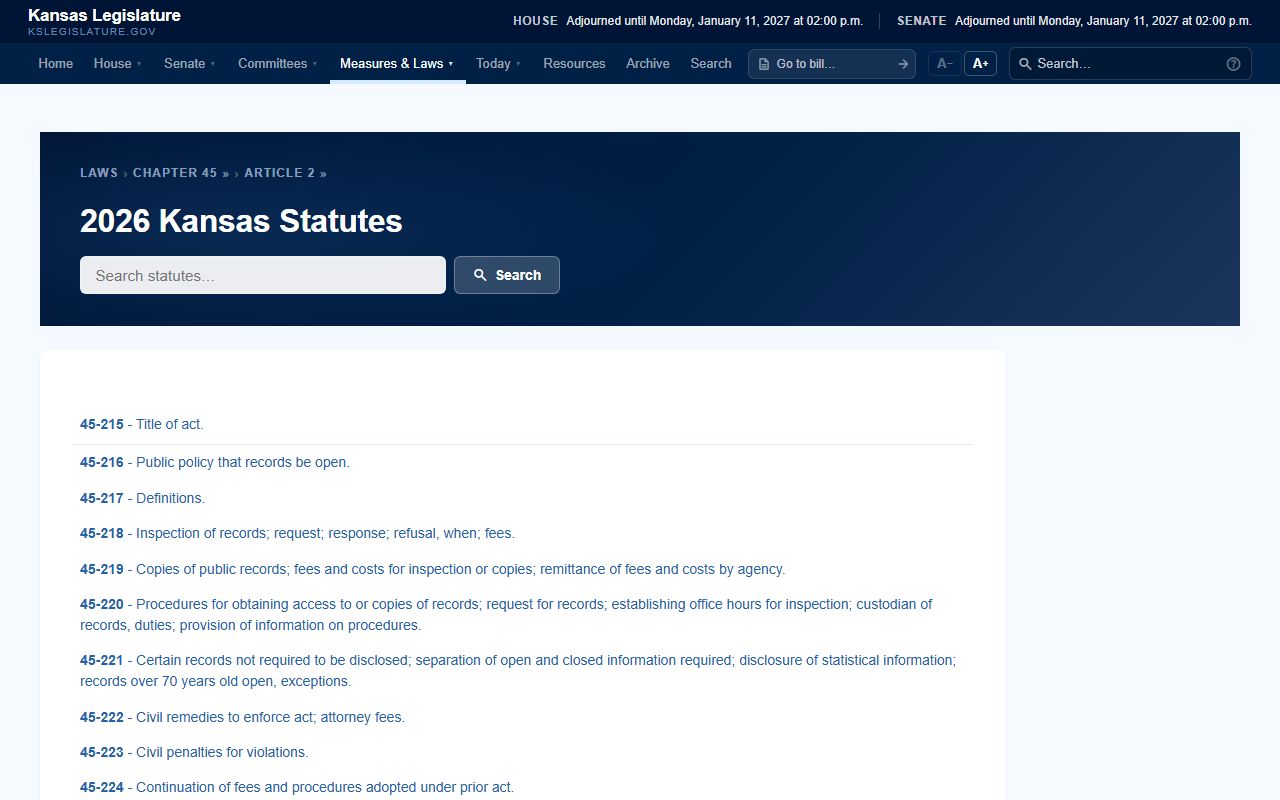
That framework supports public access, but probate users should still expect case-by-case limits for sensitive court records.
The K.S.A. 45-220 records access procedures source explains how agencies adopt procedures for access and copies.
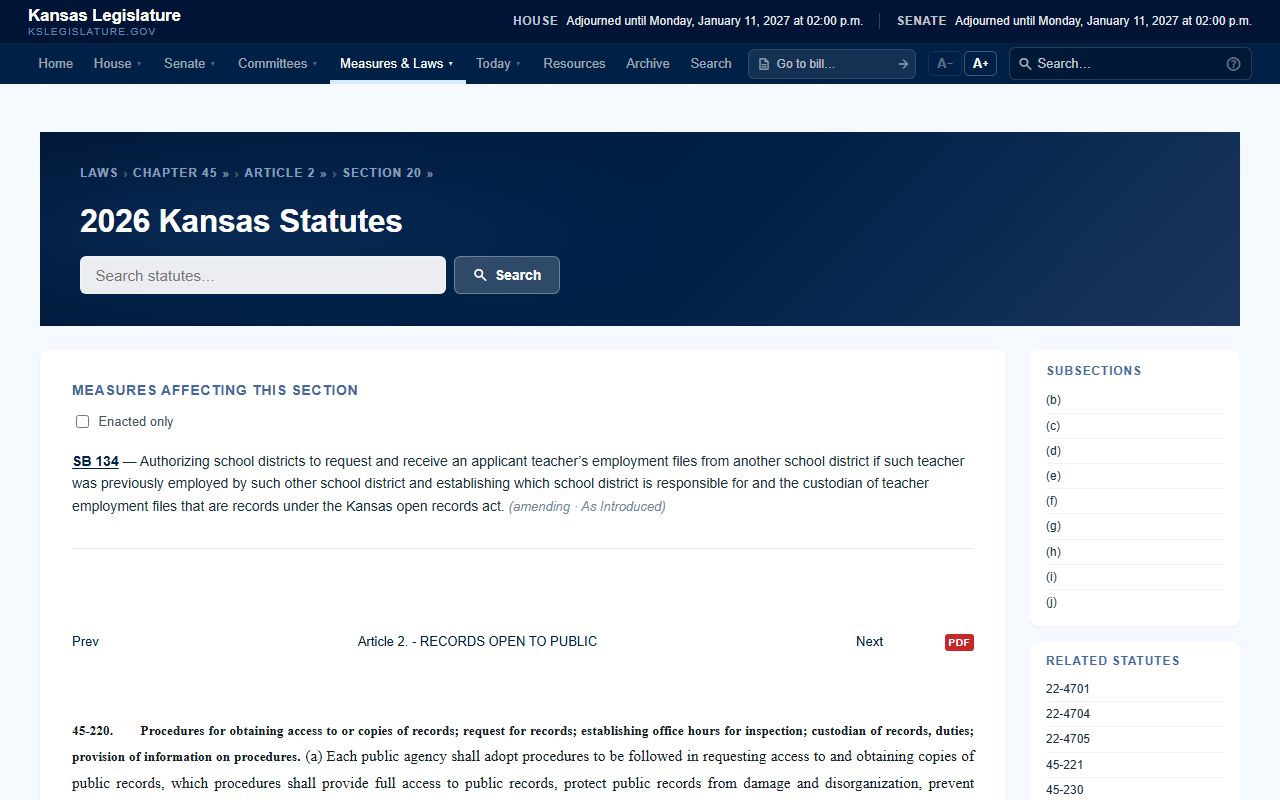
For probate records, those access procedures should be paired with the District Court clerk's instructions and any court-specific restrictions.
Access caution: A public case title does not mean every document in the probate, guardianship, or conservatorship file is open for copying.